


In the field of public emergency medical equipment, many people often confuse the terms "defibrillator" and "AED." Although the two are closely related, there are important differences between them. Understanding these differences can help organizations, businesses, and public institutions choose the right life-saving equipment and improve emergency response capabilities.
The Basic Difference Between a Defibrillator and an AED
From a technical perspective, a defibrillator is a general term for any medical device that delivers an electric shock to restore a normal heart rhythm. These devices are commonly used to treat life-threatening arrhythmias such as ventricular fibrillation (VF) or pulseless ventricular tachycardia (VT), conditions that can lead to sudden cardiac arrest if not treated immediately.
An Automated External Defibrillator, on the other hand, is a specific type of defibrillator designed for rapid response in public settings. The key advantage of an AED is its ability to automatically analyze heart rhythm and guide users through the rescue process using voice and visual instructions. This design makes the device safe and easy to operate, even for people without medical training.
In simple terms:
- Defibrillator: A broad category of medical devices used to deliver therapeutic electrical shocks.
- AED: A specialized, automated defibrillator designed for use by the general public.
Because of this user-friendly design, AED devices are now widely installed in many public areas, and the term AED Machine has become increasingly familiar in discussions about public safety and emergency preparedness.
Why AEDs Are More Suitable for Public Locations
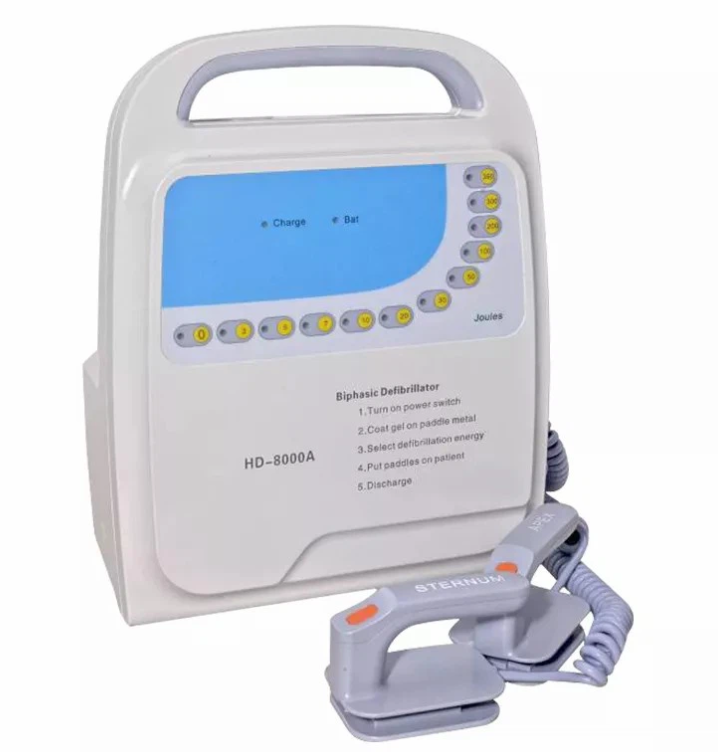
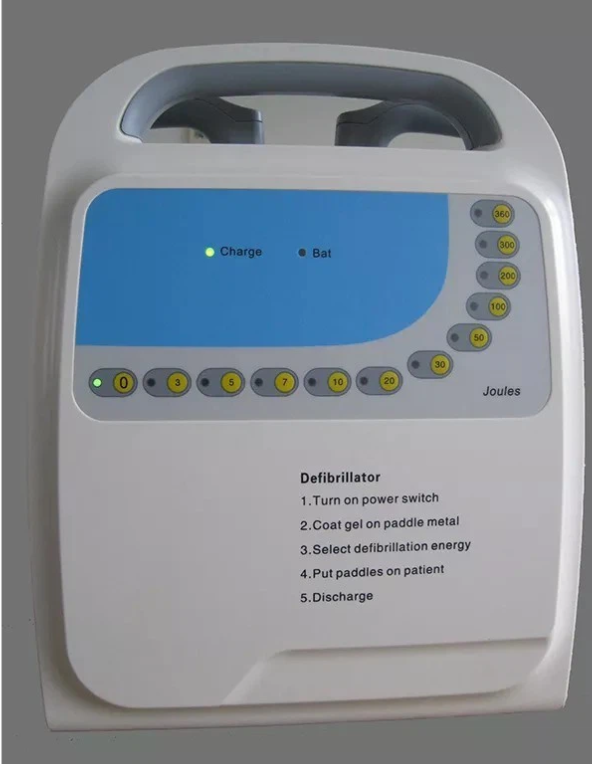
Traditional hospital defibrillators are typically operated by trained healthcare professionals. Doctors or paramedics analyze the patient's electrocardiogram (ECG) and manually select the appropriate energy level before delivering the shock. While these devices are powerful and versatile, they require medical training and are not designed for use by untrained individuals.
AEDs, by contrast, are specifically built for public access defibrillation. When the device is turned on, it provides clear instructions such as:
- "Attach the electrode pads to the patient's chest."
- "Analyzing heart rhythm. Do not touch the patient."
- "Shock advised. Press the flashing button."
These step-by-step prompts guide the rescuer through the entire process, allowing quick action before professional medical help arrives. This is why many workplaces, airports, sports arenas, and shopping centers are now installing AED Machine for public places as part of their emergency response systems.
Data: How AEDs Improve Survival Rates
According to the American Heart Association (AHA), the first 4 to 6 minutes after sudden cardiac arrest are considered the "golden window" for life-saving intervention. If defibrillation is delivered during this period, survival rates can increase to 50%–70%.
However, the majority of sudden cardiac arrest incidents occur outside hospitals, often in locations such as:
- Office buildings
- Shopping malls
- Airports
- Schools and universities
- Sports venues
Without immediate intervention, survival rates decrease rapidly with each passing minute. For this reason, deploying AED Machine for sudden cardiac arrest response has become a key strategy in many national public health systems.
Japan provides a well-known example. Over the past decade, the country has implemented a large-scale public AED program, with more than 600,000 devices installed nationwide. Studies have shown that cardiac arrest patients who receive early defibrillation from public AEDs have significantly higher survival rates compared with those who do not receive immediate treatment.
Real-World Example of AED Use
Real-life cases demonstrate how critical AEDs can be. During a marathon event, for example, a runner collapsed near the finish line due to sudden cardiac arrest. Event volunteers quickly retrieved the on-site AED Machine, attached the pads, and delivered a shock before paramedics arrived. The runner regained a heartbeat and was later transported to a hospital for further treatment.
Doctors later confirmed that the immediate use of the AED likely saved the athlete's life. Similar incidents have been reported in airports, subway stations, gyms, and stadiums around the world.
These examples highlight the growing importance of public access defibrillation programs, which aim to make life-saving equipment available wherever large groups of people gather.

Key Factors When Choosing an AED
For organizations planning to install AED devices, several factors should be considered.
Ease of Use
The device should offer clear voice prompts and visual instructions so that anyone can use it during an emergency.
Automatic Heart Rhythm Analysis
High-quality AEDs automatically determine whether a shock is needed, reducing the risk of incorrect operation.
Battery and Electrode Pad Lifespan
Most AED batteries last around 3–5 years, while electrode pads also require periodic replacement.
Self-Testing Capability
Many modern AEDs perform automatic self-checks to ensure the device is always ready for use.
These considerations are especially important for companies deploying AED Machine for workplace safety and emergency preparedness.
As awareness of emergency preparedness continues to grow, AEDs are becoming an essential part of public safety infrastructure. While an AED is technically just one type of defibrillator, its automated features, user-friendly design, and high reliability make it ideal for use outside medical facilities.
Today, schools, businesses, airports, and shopping centers are increasingly installing AED devices to protect employees and visitors. In critical moments, having access to an AED can make the difference between life and death, reinforcing the importance of making these devices widely available in public spaces.