


An operating table is an essential piece of medical equipment in a surgical setting. It primarily provides physical support to the patient during surgery while allowing surgeons greater flexibility and accessibility.
The main types of operating tables include:
1. General operating table
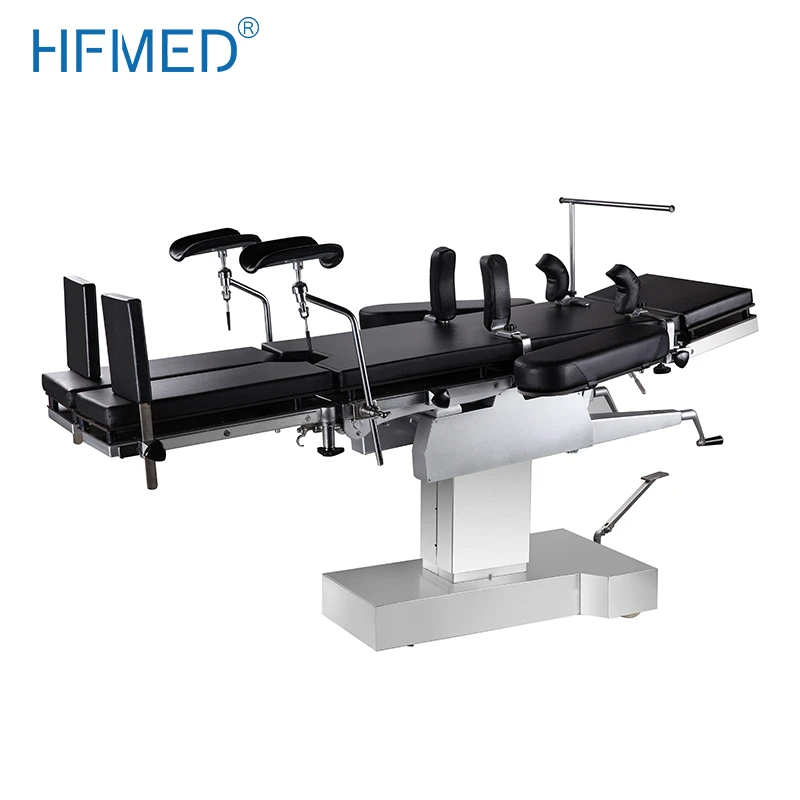
Suitable for a variety of surgeries, the operating table is adjustable in height, tilt, and position (e.g., Trendelenburg, reverse Trendelenburg, lateral tilt, etc.); suitable for a variety of surgical specialties (e.g, abdominal, thoracic, orthopedic, etc.).

2. Orthopedic operating table
It is designed specifically for bone and joint surgery (e.g., hip, knee, spine). It is usually equipped with traction devices, leg immobilizers, and a radiolucent top for imaging (compatible with C-arms), and includes a dedicated extension for limb positioning.
3. Radiolucent operating table
Made of materials that allow for X-rays and imaging during surgery (e.g., carbon fiber), it is commonly used in trauma, orthopedics, and neurosurgery etc.

4. Cardiac operating table
Used for open chest surgery and vascular surgery, etc., and usually includes a kidney bridge and lateral support for optimal operation during the surgery.
5. Neurosurgery Tables
Precisely adjustable for head and spine surgery, often includes Mayfield clamps for skull fixation.
6. Gynecology/Urology Tables
• Suitable for lithotomy position (legs elevated and supported), commonly used for gynecological hysterectomies, cystoscopy, and childbirth.
7. Pediatric Tables
Generally smaller for children/infants, adjustable to accommodate growth differences.
8. Bariatric Tables
Stronger construction for heavier patients (weight capacity up to 1,000 pounds or more), with a wider surface for patient safety and comfort.
9. Electric, Hydraulic, and Manual Tables
• Electric: electrically adjustable (common in modern operating tables).
• Hydraulic: driven by hydraulics.
• Manual: adjusted by hand crank (not common today).
Key features of each type of table:
• Modular: interchangeable headrests, legs, and accessories.
• Position-aware: supine, prone, lateral, and other positions are possible.
• Highly compatible: Can be integrated with imaging systems (e.g., MRI, CT).
The choice depends on surgical specialty, patient need,s and technical requirements. Do you want to know more about a specific type? Feel free to ask us at HFMED!